
HOAS — Navigation redesign through user research & information architecture
Improving content findability for student housing services
Role: Senior Service Designer / Knowit
Client: HOAS
Duration: ~3 weeks / Spring 2025
Focus: User research / Information architecture / Navigation design / Usability testing
Impact
Aligned the navigation structure with real user goals through research-driven information architecture
Expanded the project scope from a navigation update to a broader review of information architecture and content structure
Provided a validated navigation model to guide implementation and future content development
Improved content findability for key user groups, including exchange students
Reduced uncertainty around structural decisions through usability testing
Overview
HOAS provides student housing services for a diverse user base, including young adults, families, and international exchange students. Over time, the website’s navigation had evolved in ways that no longer clearly supported different user needs.
The project focused on improving navigation and information architecture to better support typical user journeys and clarify access to key information.
Challenge
The website structure had evolved over time and did not always clearly reflect different user goals or priorities. Stakeholders initially requested a lightweight navigation update. We proposed using this opportunity to review the overall structure from a user perspective and ensure the content supports key journeys before refining the UI.
The challenge was to improve clarity and access to information while maintaining familiarity for existing users and supporting different user needs.
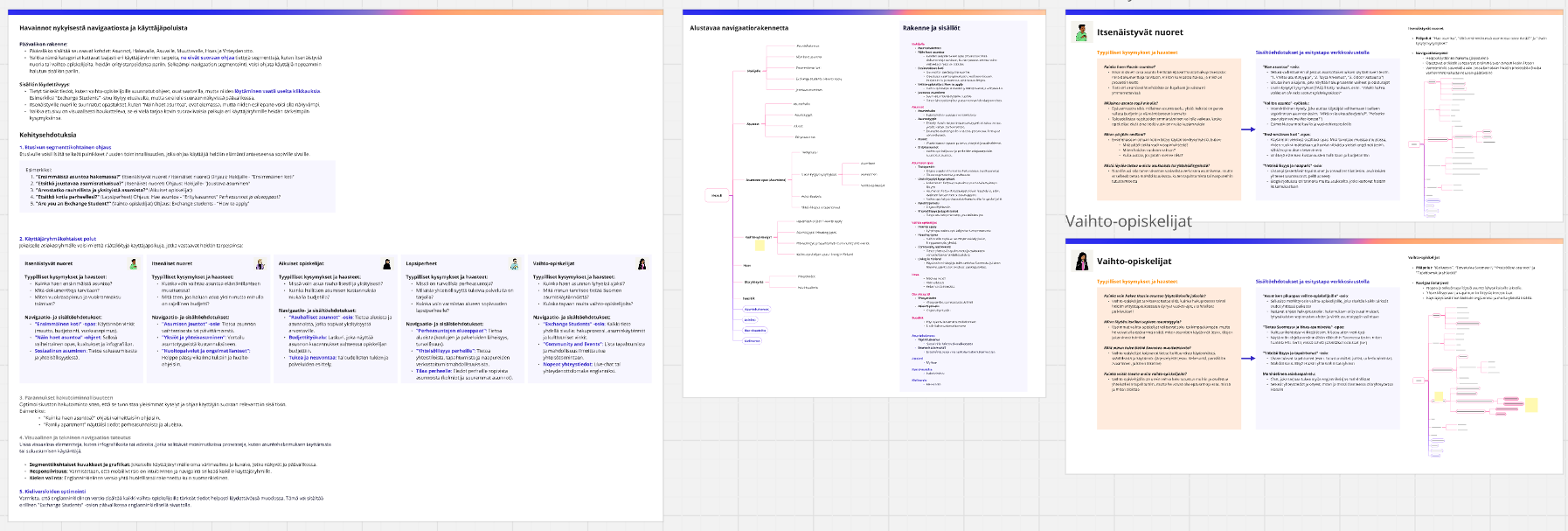
Navigation redesign Miro board.
Key design decisions
Rather than implementing a visual navigation refresh, we proposed examining the underlying service structure through real user journeys. This helped ensure that navigation changes addressed root causes rather than symptoms.
Key decisions included:
using user journeys to guide information architecture changes
balancing structural improvements with continuity for existing users
introducing a dedicated entry point for exchange students
validating structural changes before UI implementation
Approach
Analysed key user groups and goals
Audited existing navigation structure and terminology
Defined a new information architecture and navigation model
Iterated the structure with stakeholders
Planned and conducted remote usability testing in Finnish and English: Testing focused on realistic navigation tasks
The UI layouts and clickable prototype used in testing were produced by UX/UI Designer Samuli Kemppi, based on the navigation structure I defined.
Outcome
Research findings and user journey insights
New information architecture and navigation model
Terminology and structure recommendations
Usability testing report and implementation recommendations
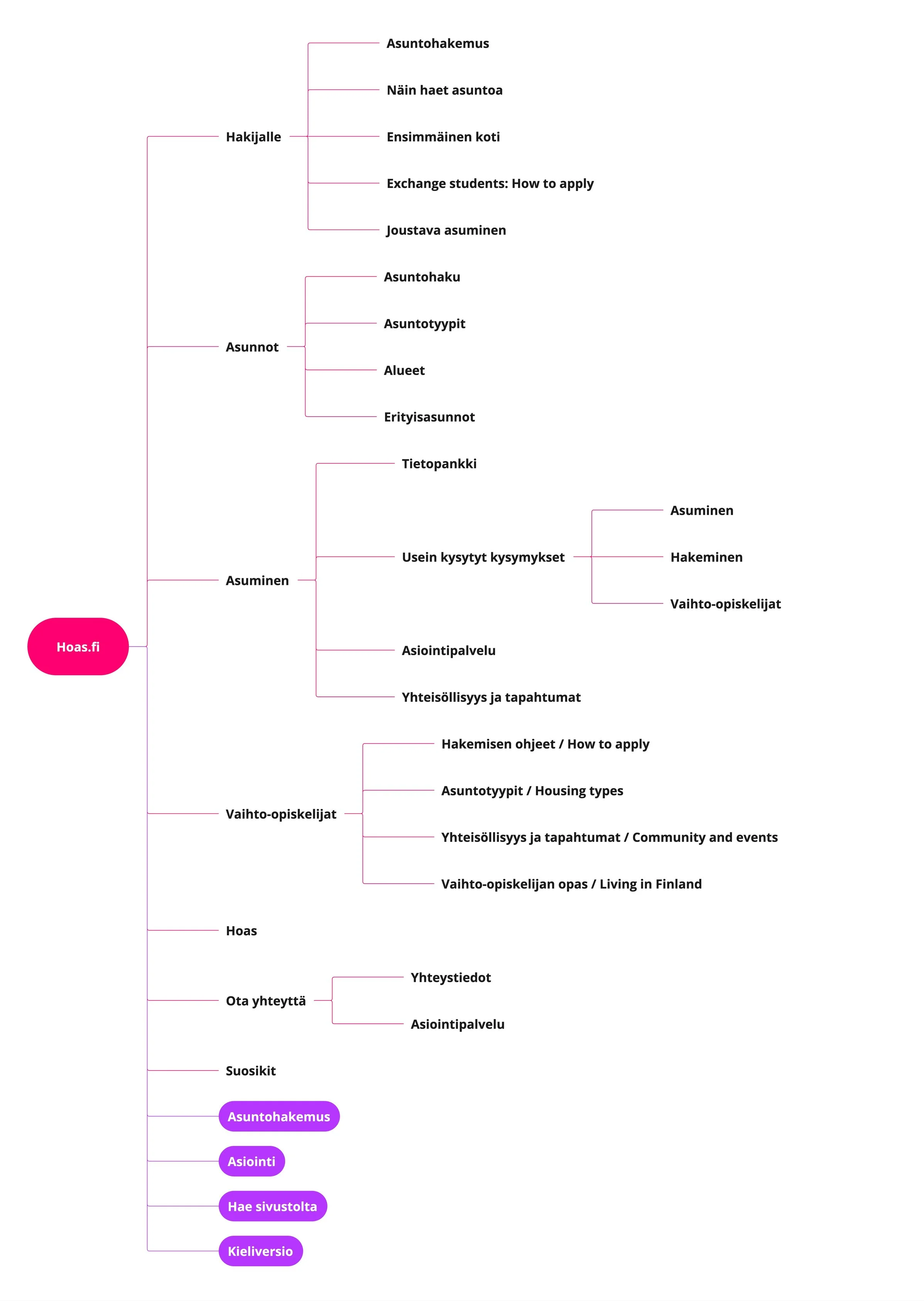
New navigation structure.