
Design with Folk — Service design for a volunteer-based organisation
Improving coordination, communication, and continuity in a community-led organisation

Role: Service Designer (MA thesis project)
Client: Matit ja Maijat, Finnish folk dance club
Duration: Spring 2020
Focus: Service design / Co-creation / Facilitation / Community engagement
Impact
Made roles, responsibilities, and recurring coordination needs visible in a volunteer-based organisation
Defined a research-based vision clarifying the club’s goals and guiding future development
Improved transparency and information findability by redesigning the website structure and key content
Reduced reliance on tacit knowledge by proposing lightweight documentation and scheduling practices
Supported continuity in a changing volunteer context through clear role framing and orientation support
Overview
This project explored how service design can support the everyday functioning of a volunteer-based association that operates through a mix of hired dance teachers, board members, volunteers, and hobbyists. Many practices had developed organically over time, with important knowledge shared through experience rather than documented structures.
The work focused on communication and information sharing: how the club can coordinate responsibilities, keep people informed on time, and make key information visible both internally and to potential new members. The outcome was a set of practical, feasible design deliverables grounded in qualitative research.
Challenge
The club operates at the intersection of volunteer-based association work and increasingly professionalised services. This creates real-world coordination needs: responsibilities may accumulate on a small number of individuals, schedules require proactive planning, and expectations between hired and voluntary roles need clarity and trust.
At the same time, the solutions needed to be realistic for a community where most work happens in people’s spare time. The goal was not to “professionalise everything”, but to support continuity and reduce unnecessary friction through clearer communication, shared understanding, and lightweight tools.
Key design decisions
I focused the deliverables on communication and information sharing rather than trying to address everything at once. The work prioritised feasible, lightweight tools that the club could maintain over time.
Key decisions included:
Narrowed the scope to a small set of guiding insights (involvement, scheduling, organised communication, visibility, public image) to ensure focus and feasibility
Used visualisations to clarify role complexity and communication relationships across the organisation
Recommended existing templates and tools where possible to minimise adoption effort and support long-term use
Approach
Conducted semi-structured interviews with dance teachers
Facilitated a co-design workshop (nearly 20 participants) with members of the club
Synthesised qualitative data into 15 insights and selected five guiding insights to define scope
Produced design deliverables that translate insights into practical structures and communication improvements
Iterated continuously based on feedback from the club board
Outcome
Club vision poster grounded in research findings
Role division visualisation and communication chart
Hobbyist journey map
Website redesign concept and information architecture (WordPress recommendation; six top-level sections)
Digital enrolment form replacing paper enrolment
Recommendations for scheduling and coordination (e.g., year-clock and shared calendar)

Communication chart

Analysing the workshop materials.

Defining roles and responsibilities.

Customer journey mapping.

Co-design workshop with the club members.
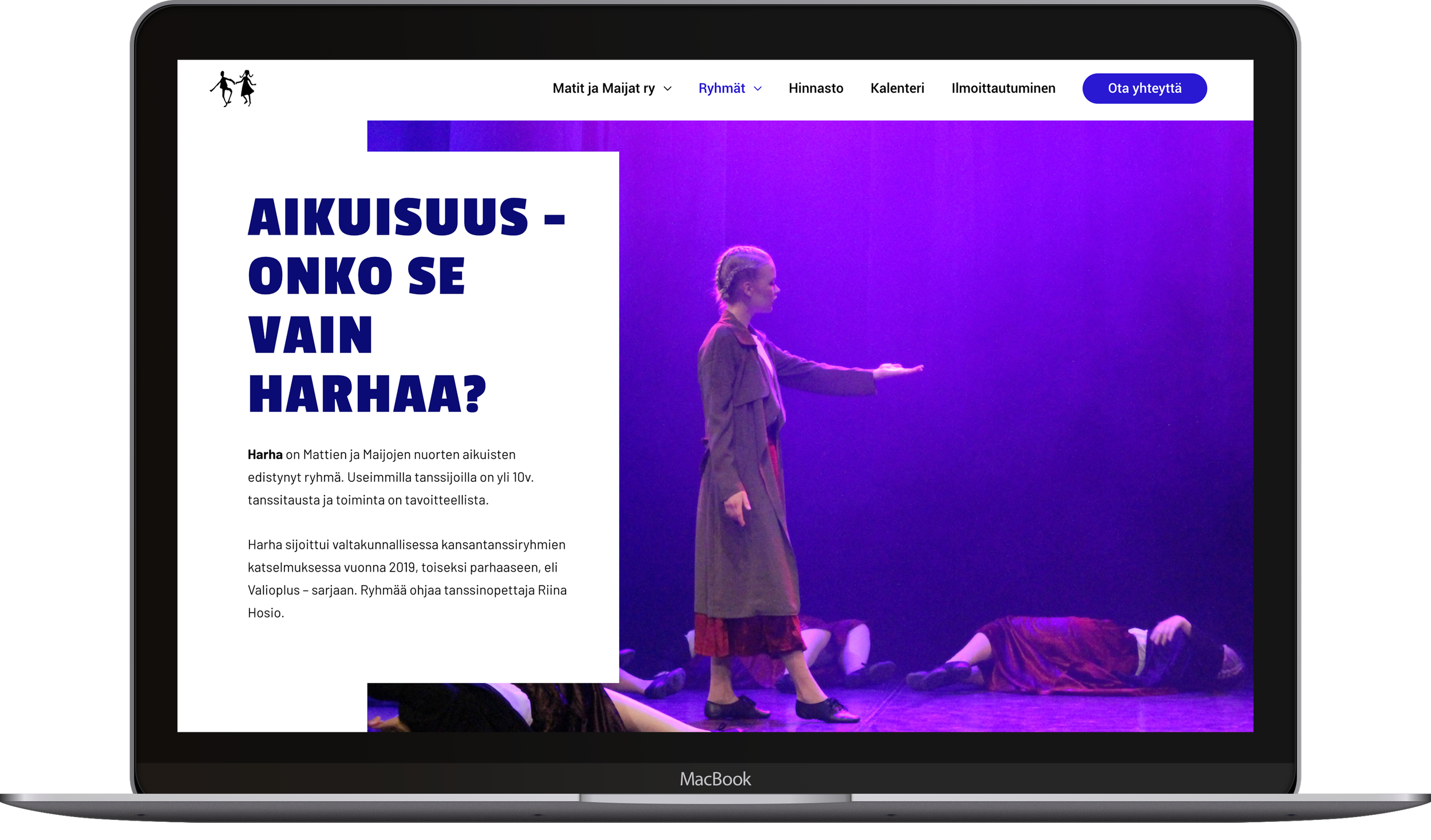
Website redesign.