
Attune — Recovery-first focus app
Personal product concept exploring recovery-driven interaction design
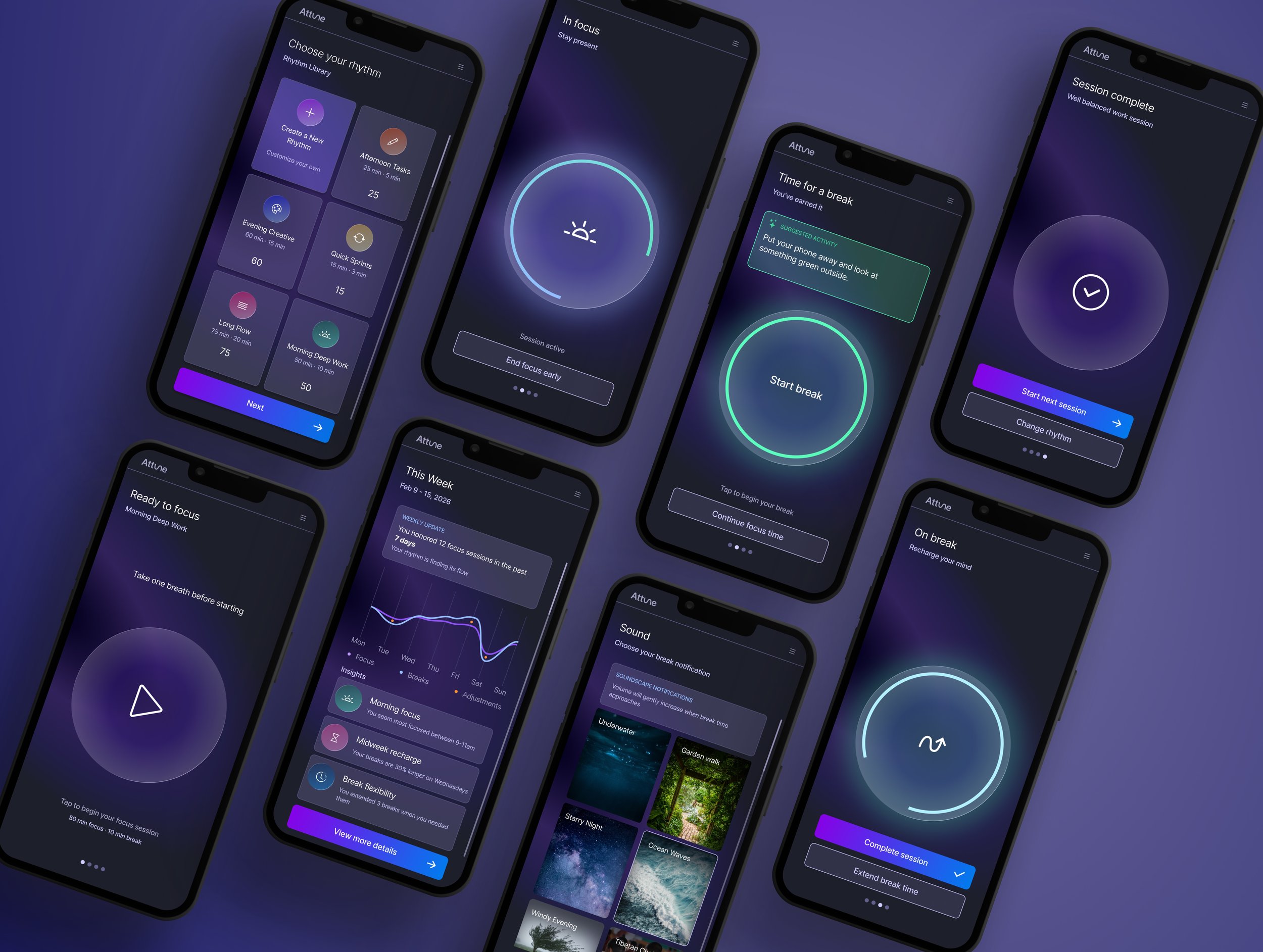
Role: Product Designer (Personal project)
Duration: 3 weeks / Spring 2026
Focus: UX Design / Interaction Design / Behavioural Design / Mobile UI
Impact
Defined a recovery-first interaction model challenging productivity-driven focus tools
Reduced time pressure and cognitive load through behaviour-informed interaction design
Designed core interaction patterns supporting calm, low-distraction use
Produced a high-fidelity mobile product concept
Overview
Attune is a mobile application concept designed to support sustainable focus through personalised work–break rhythms. Instead of optimising productivity, the concept explores how interaction design can support mental clarity and recovery without pressure, gamification, or disruptive notifications.
The project originated from a simple observation: during deep focus, people often recognise cognitive fatigue only after it has already built up. The goal was to design a calm experience where recovery is treated as part of sustained performance rather than an interruption.
Challenge
Most focus tools rely on timers, alerts, and performance tracking, which can introduce urgency, interrupt flow or create unnecessary pressure around “ideal” behaviour. The challenge was to design a system that supports sustained concentration while reducing time pressure and maintaining user autonomy.
Key insight: most focus tools optimise productivity — few support recovery.
Key design decisions
The concept prioritised calm interaction and behavioural guidance over user performance optimisation.
Key decisions included:
Removing productivity metrics to avoid performance pressure
Replacing numerical timers with non-numerical visual feedback
Designing a circular interface to communicate rhythm instead of countdown
Using gradual visual and sound transitions to signal breaks
Prioritising minimal interface during focus and low cognitive load over feature breadth
Approach
Conducted rapid review of existing focus and productivity tools
Explored interaction models through low-fidelity wireframes in Figma
Iterated concepts based on perceived cognitive load and flow disruption
Developed eight wireframe flows and nine high-fidelity UI layouts
Discussed early interaction concepts with peers for feedback
Outcome
Interaction model for recovery-driven focus sessions
Core user flows covering onboarding, focus, and break transitions
High-fidelity mobile UI layouts
Visual timer and circular progress interaction pattern
Concept for adaptive rhythm suggestions and behaviour insights
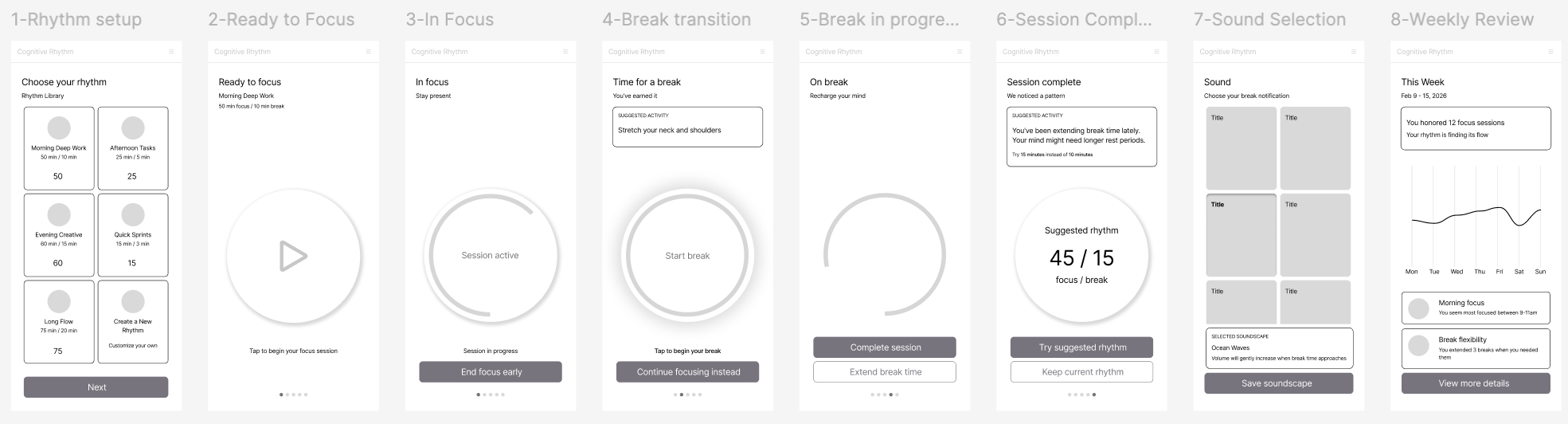
Rapid prototyping with wireframes in Figma.
Experience highlights
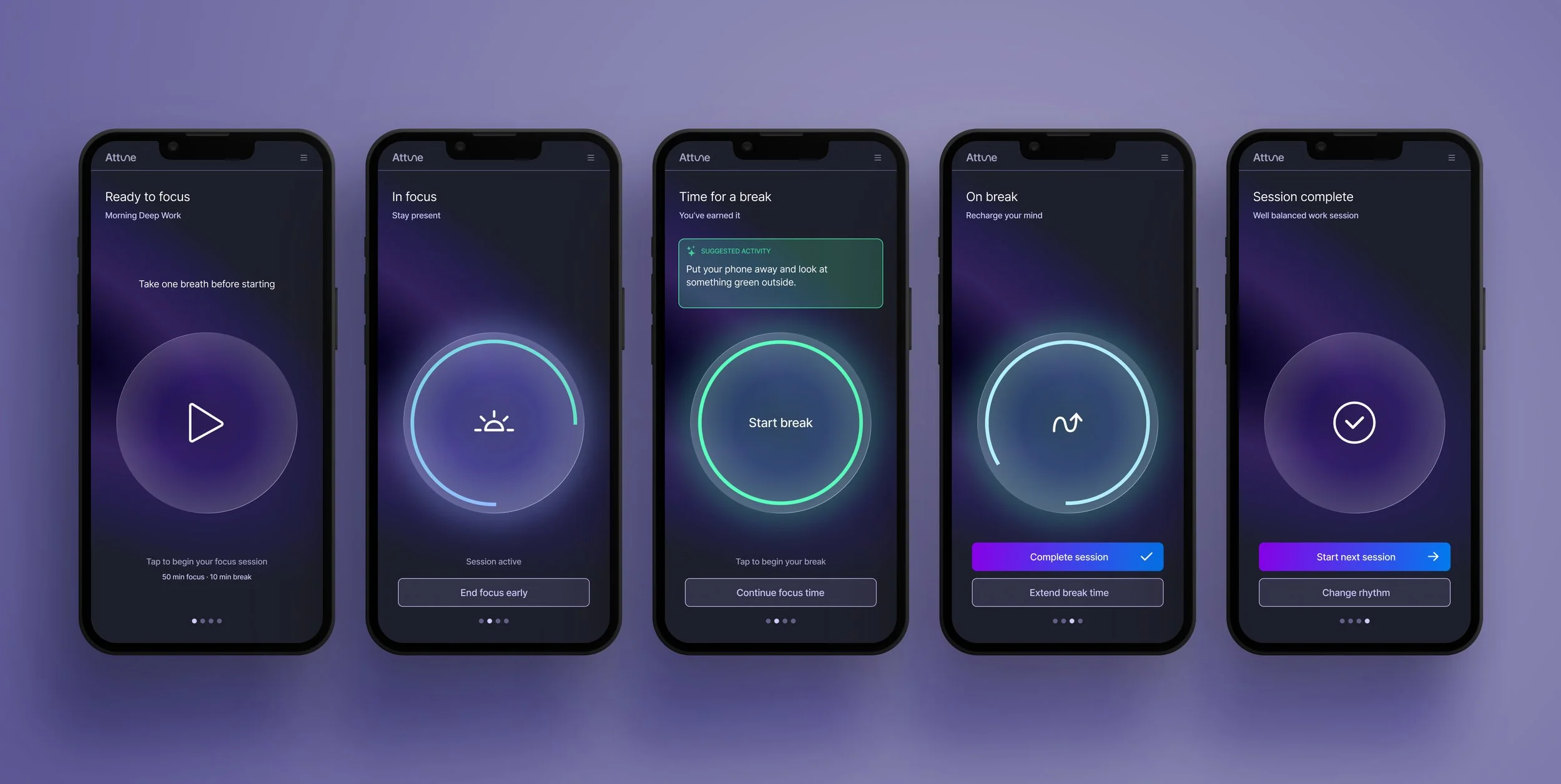
Focus session flow
Minimal visual time indicator
Circular progress communicates rhythm
Options to extend session or end focus early
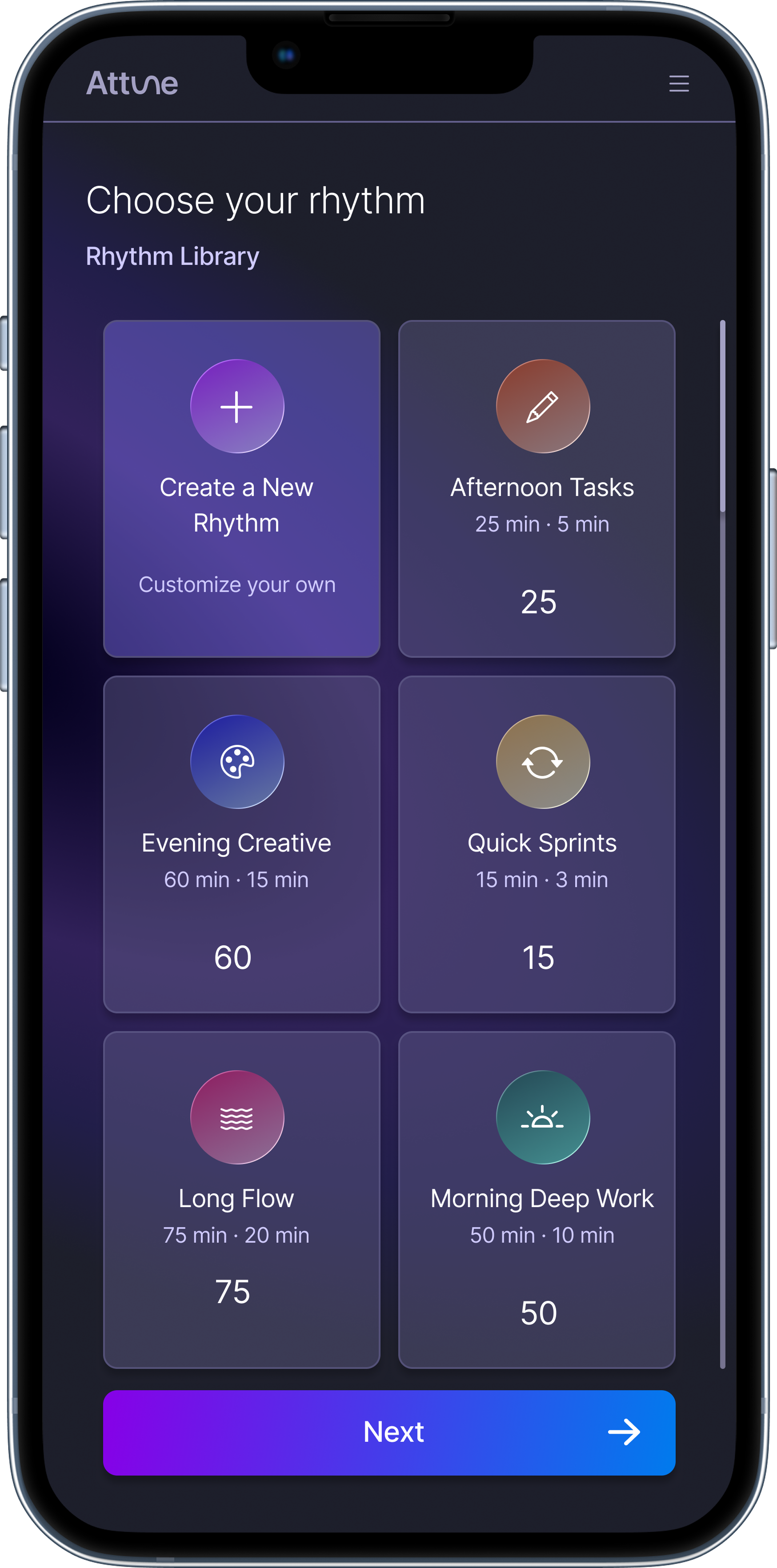
Rhythm setup
Rhythm library with presets
Option for custom rhythm creation
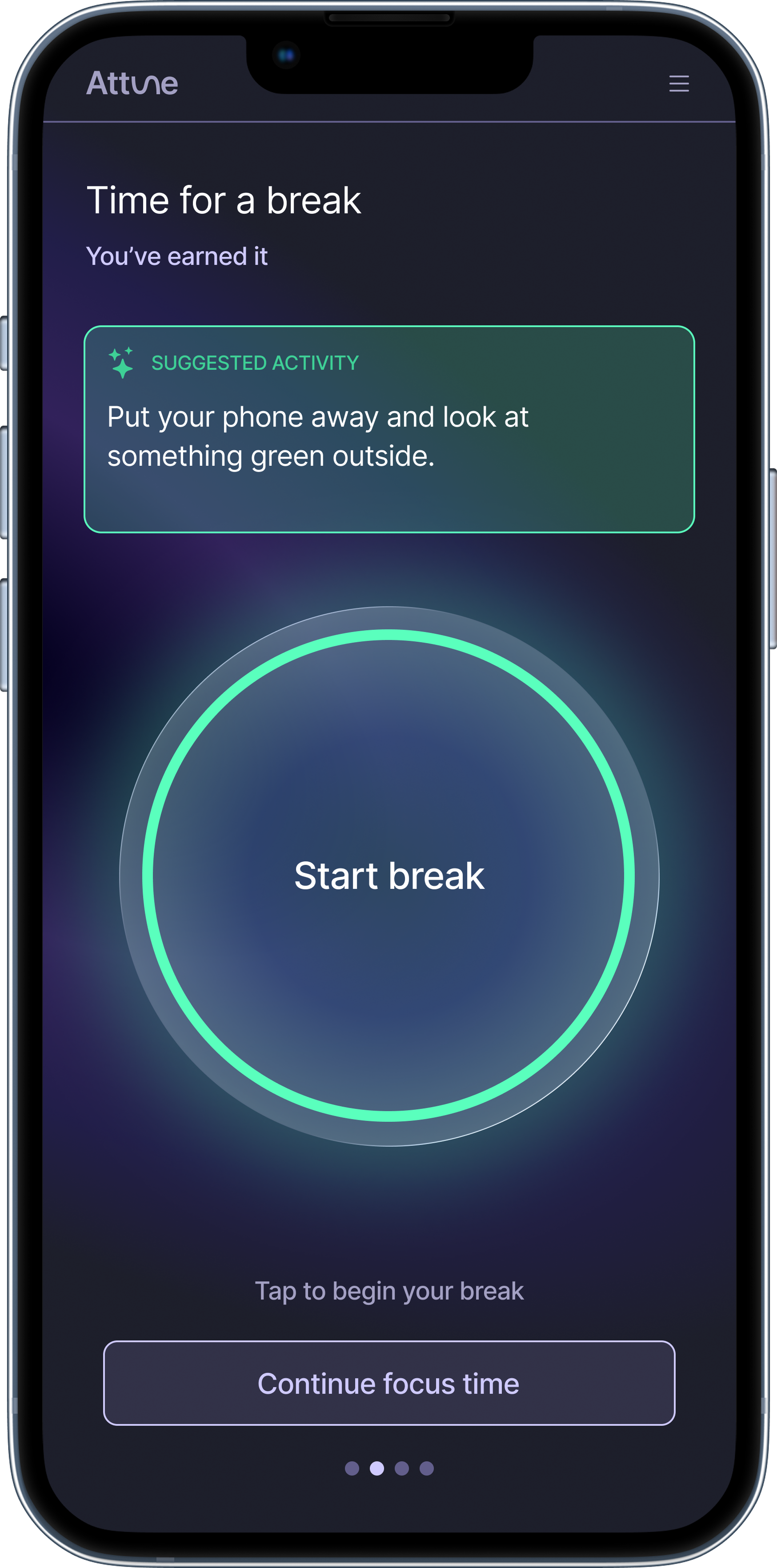
Break transition
Gradual visual and sound cues
Suggested restorative activity
Option to continue focus
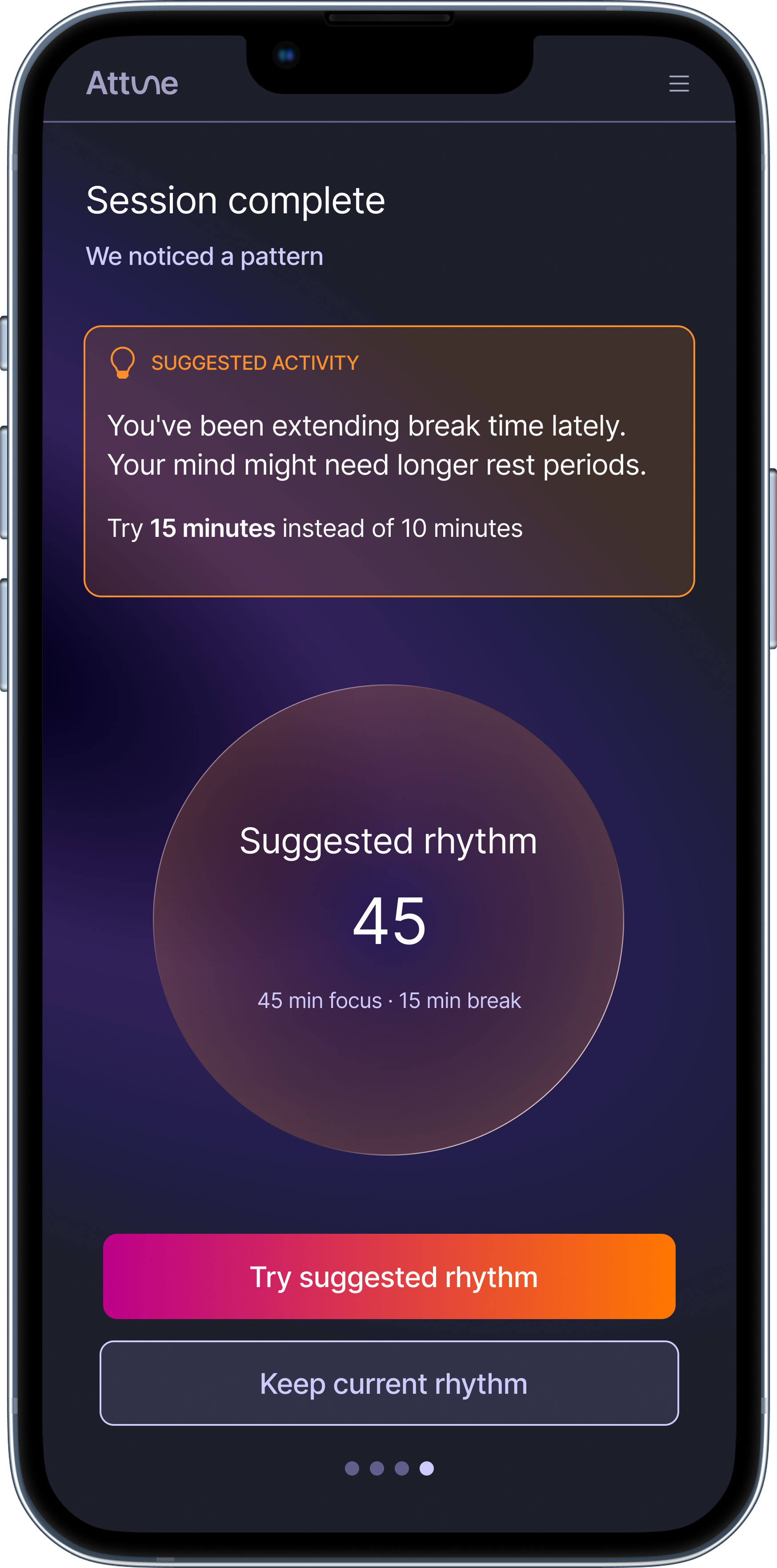
Pattern recognition
Detects behaviour patterns
Suggests rhythm adjustments
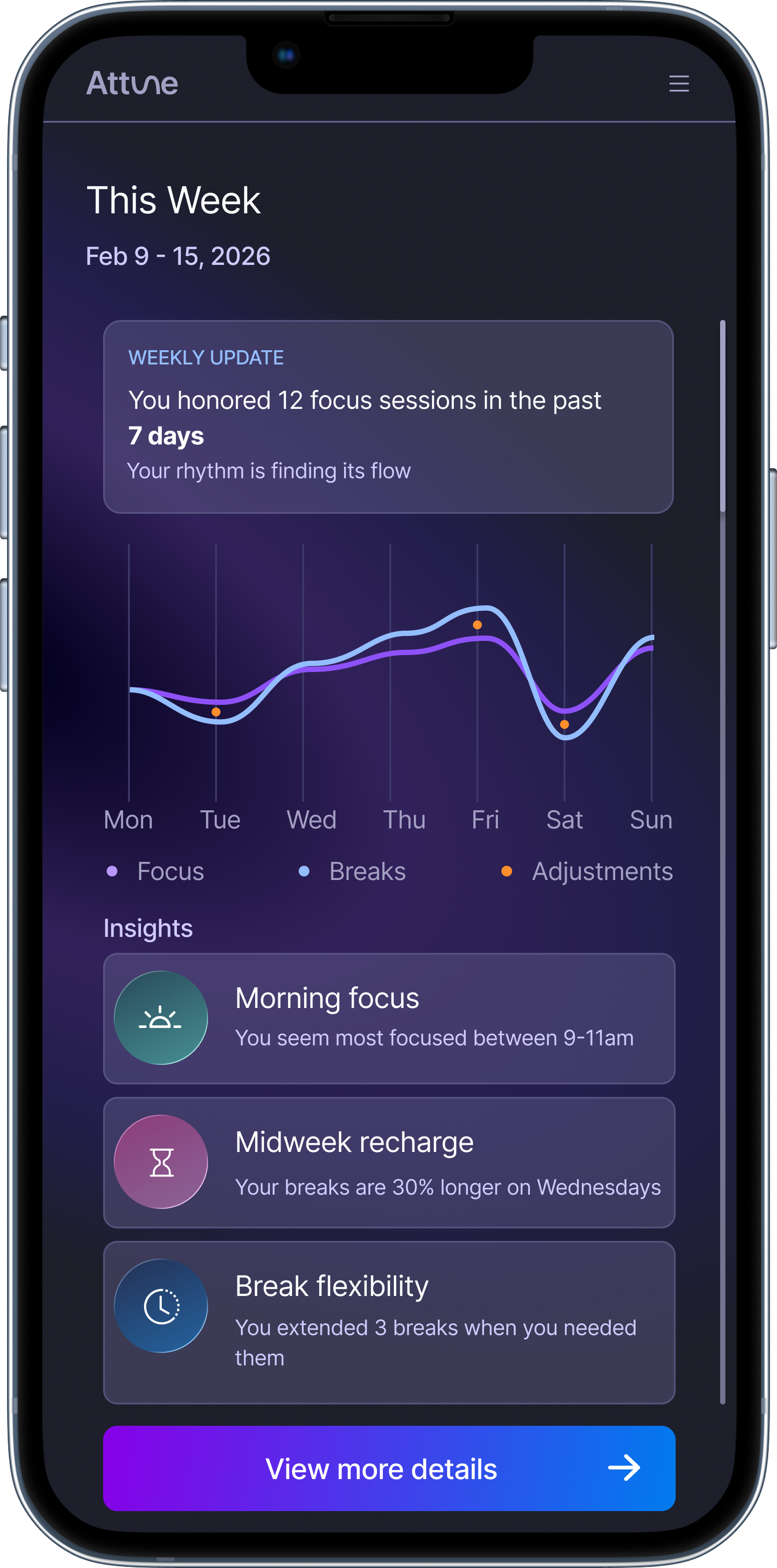
Weekly insight
Visual overview of focus patterns
Personalised usage insights
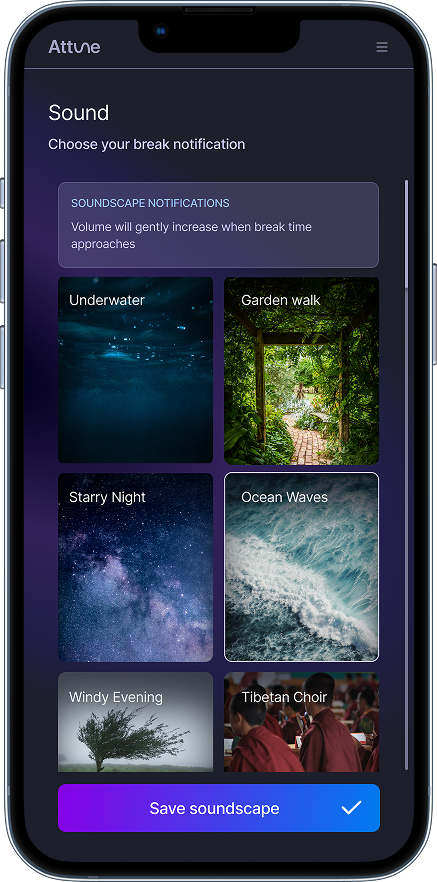
Soundscape selection
Personalised soundscapes support low-stress break awareness
Sounds can be assigned to specific focus rhythms
Reflection
This project strengthened my ability to design low-distraction interfaces, make intentional feature trade-offs, and reduce cognitive load through interaction design. If developed further, I would validate the concept through user testing and explore a functional prototype.